Dirt Work and Grading in Kaufman TX
Kaufman Culvert handles dirt work and grading in Kaufman TX: house pads, driveway subgrades, lot grading and road-ditch work. Blackland clay doesn't drain on its own, so every cut and fill is shaped to move water off the site the way Kaufman County allows.
Dirt Work and Grading for Kaufman County Properties
Grading is one of those things that's easy to underestimate until you see what happens when it's done wrong. A property that drains poorly in Kaufman County doesn't just have standing water: it has soft spots that eat gravel, eroded ditch banks that widen season by season, and a driveway that costs more to maintain than it cost to install in the first place. Getting the slope right from the start avoids those problems.
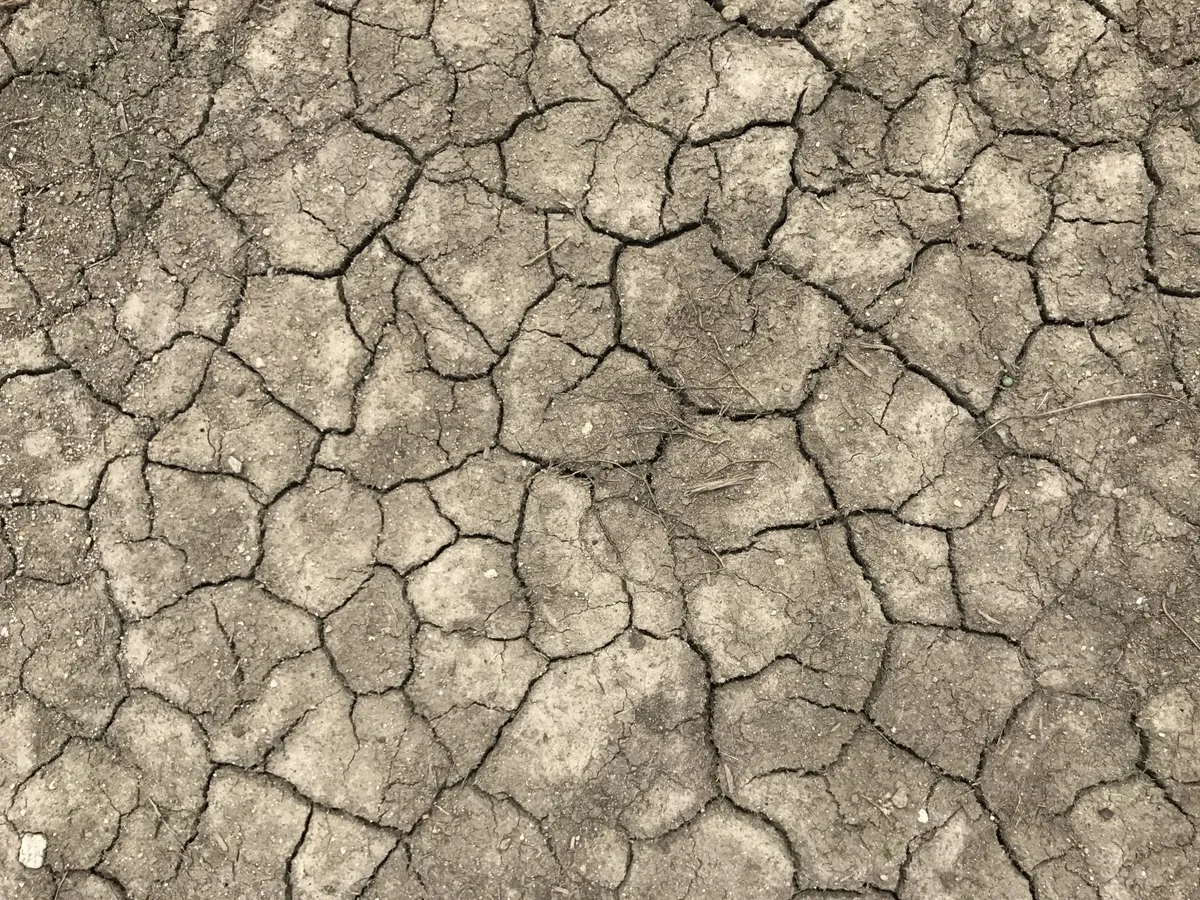
Kaufman County sits on Blackland Prairie Vertisol clay with over 60% clay content. This soil is essentially impermeable when wet and behaves like concrete when dry. Rainfall that hits a clay surface in Kaufman County doesn't soak in to any meaningful depth. It runs off wherever the land takes it. If the land takes it toward your driveway entrance, your building site, or your home foundation, that runoff is your problem. Grading redirects it to where it needs to go: toward drainage ditches, culverts, and natural low points that can carry it away.
Grading and culvert installation often go together in Kaufman County. The two services are closely related: a culvert is only useful if the grading upstream channels water toward the pipe inlet, and grading around a driveway entrance has to account for the culvert elevation to produce a finished surface that drains without creating a hump or low spot at the road.
What Dirt Work in Kaufman Covers
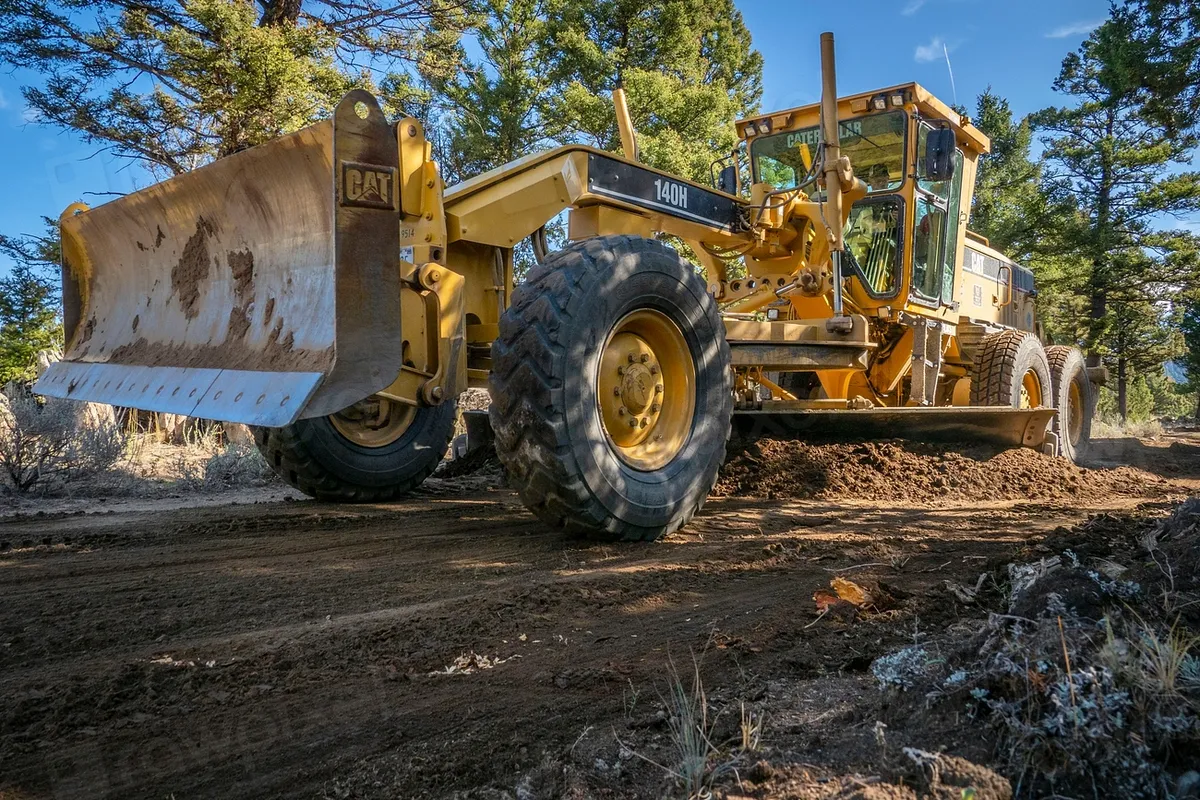
"Dirt work" is the catch-all name for moving, shaping and compacting soil before anything gets built on it. On rural Kaufman County lots it usually means one or more of these:
- House pads and shop pads: building up and compacting a level pad above the surrounding ground so the slab stays dry
- Driveway cuts and subgrades: stripping topsoil and shaping a crowned base before gravel goes down
- Road-ditch crossings: cutting the ditch to its flowline for a permitted driveway culvert
- Lot grading and swales: sloping ground away from buildings and steering runoff to an outlet
- Fill in, spoil out: hauling select fill where clay has to be built up, and taking off what is cut
The pieces depend on each other. A pad, a drive and a culvert all have to agree on elevations, which is why it pays to plan the gravel driveway and the driveway culvert installation in the same dirt work job instead of three separate ones.
The County Drainage Rule Behind Every Dirt Work Job
Kaufman County's driveway permit carries a condition that shapes how a lot can be graded: no additional drainage discharge created by the adjacent development may be re-routed onto the county's roadway ditches. Only the existing discharge is allowed into the road ditch unless the County Engineer or a designee approves more.
In practice that means a new house pad, roof and driveway cannot simply be sloped so all the extra runoff dumps into the road ditch. The grading plan has to spread it, slow it or keep it on the property, or get the County Engineer's approval first. The rule sits in the culvert application, explained on the Kaufman County culvert permit page.
Building a house pad can trigger other county paperwork too. The same county development form lists a Floodplain Development Permit and a Residential Building Notice and Inspection requirement. Check the property on the FEMA flood map at msc.fema.gov before the first load of fill arrives.
Why Grading Matters on Kaufman County Clay
Most of the drainage work in Kaufman County is done by surface grade, not by soil infiltration. Unlike sandy East Texas soils where water percolates through the ground, Blackland clay holds water at the surface and in the top few inches. That means slope is everything. A 1% cross-slope on a driveway surface moves water to the edge and into the side ditch. A flat or reverse-slope driveway holds water over the clay subgrade until it saturates, softens the clay, and starts producing ruts.
The seasonal movement of Blackland clay also affects grades over time. The soil expands by 2-3 inches in wet conditions and contracts in dry conditions. This movement can shift graded surfaces slightly season by season, which is why initial grading needs to be generous enough in slope to tolerate some settling without losing drainage function. Good grading builds in that tolerance.
Slope and Drainage Design
Before any grading begins, the first step is establishing where water on the property currently goes and where it needs to go. For a driveway installation, that means measuring the existing ditch elevation at the county road, identifying the high point of the property, and designing a grade that falls from the property toward the ditch without creating any low points that collect water mid-run.
For a building site or yard area, drainage design means directing runoff away from the structure footprint on all sides. Kaufman County clay under a saturated building pad can cause significant foundation problems over time. Even if the structure itself is on a slab, persistent wet clay against the foundation increases hydrostatic pressure and promotes differential settlement. Grading the site to shed water away from the structure is part of doing the job right.
Common minimum design slopes: 2% on driveway surfaces, 1% minimum on any graded area that drains toward a culvert or ditch. Areas adjacent to structures get at least a 3% fall for the first 10 feet away from the foundation.
Rough Grade vs. Final Grade
For most driveway and site prep projects in Kaufman County, grading happens in two phases. Rough grade establishes the basic landform: removing high spots, filling low spots, and shaping the general drainage pattern. This is done with a box blade or motor grader, depending on the extent of the work. After rough grade, the site needs to settle for a short period before final grade, especially if significant fill was placed.
Final grade refines the surface to within a few tenths of a foot of the design elevation and establishes the finished drainage crown. On a driveway, final grade is also when the surface is made as smooth as possible before gravel placement. If the gravel goes down over an uneven final grade, you feel every bump through the aggregate.
For simpler jobs, rough grade and final grade happen in the same visit. Larger sites, or sites where substantial fill was brought in, benefit from a short wait between the two phases to let the fill settle and compact before the final shaping pass.
Combining Grading with Culvert Work
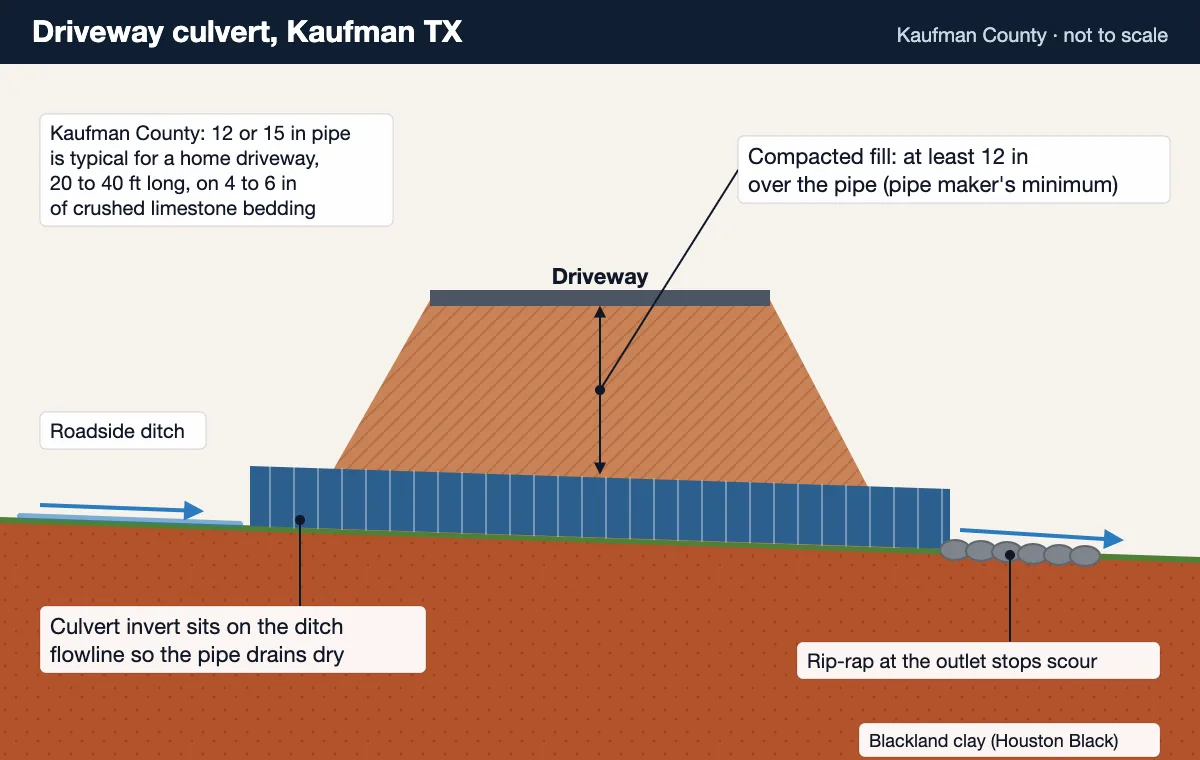
Many grading projects in Kaufman County happen in combination with a culvert installation. The driveway approach grade has to be designed around the culvert invert elevation: the finished driveway surface needs to sit at least 12 inches above the top of the culvert pipe to provide adequate structural cover. That means the culvert invert elevation controls the minimum depth of the ditch on both sides, and the ditch depth controls the grading of the approach.
The culvert is set at the correct invert elevation first, then the approach is graded to match. Doing it in the correct sequence means the finished driveway doesn't have a hump at the culvert location or a low spot that collects water before it can enter the pipe.
County and TxDOT Coordination

Grading work that modifies drainage within the Kaufman County right-of-way requires coordination with the Commissioner's office. If your driveway approach, culvert, or side ditch falls within the county easement along the road, that work is subject to the culvert permit process under Section 11.03. The right-of-way boundary should be identified during the estimate visit, along with who files the permit application when county approval is needed.
For driveways that access state highways or FM roads, TxDOT has separate permit requirements through the Access Management program. If your property fronts US-80, US-175, or an FM road maintained by TxDOT, that should be flagged during the estimate and the TxDOT permit included in the project scope.
Grading and Site Prep: Frequently Asked Questions
Is dirt work the same as grading?
Do I need a permit to build a house pad in Kaufman County?
What is grading and why do I need it for my property in Kaufman TX?
How much does grading cost for a driveway or property in Kaufman County?
Does Kaufman County clay make grading more difficult than other soils?
Can I combine grading with culvert installation in one project?
Do I need a permit for grading or site prep in Kaufman County?
How long does graded work last before it needs to be redone?
- Slope and drainage design
- Rough grade and final grade
- Drainage crown establishment
- Side swale and ditch shaping
- Culvert coordination
- County drainage rule checked
- House pads and shop pads
- Building site prep
- Free on-site estimates
Need dirt work or grading in Kaufman County?
Grading designed for clay drainage, coordinated with culvert work. Free estimates.